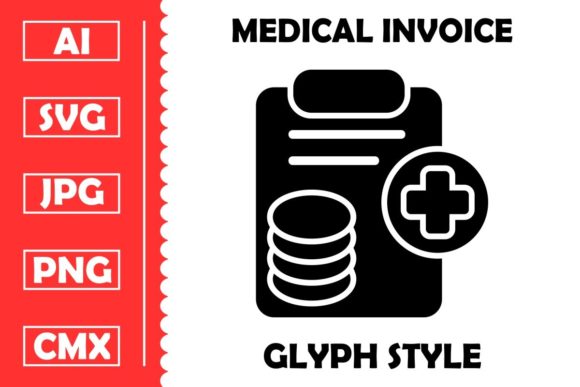
Medical Invoice Vector Glyph Icon Design
As a brand designer with years of experience, I often seek out high-quality graphic design assets that can elevate small business branding. Medical Invoice Vector Glyph Icon Design caught my attention for its clean, professional aesthetic and versatility across multiple applications. This vector-based icon offers a modern edge that fits well in both digital and print environments.
The First Impression: A Professional Yet Approachable Mood
The Medical Invoice Vector Glyph Icon Design exudes a sense of clarity and precision. Its simple lines and structured form suggest professionalism without being overly formal. This makes it ideal for businesses that want to convey trust and reliability while maintaining a friendly tone. It could work well for a local coffee shop, a handmade soap brand, or even a boutique store looking to add a touch of sophistication to their product labels.
The icon’s minimalist style feels modern and adaptable, making it suitable for a wide range of brand identities. Whether you're aiming for a sleek, contemporary look or something more understated, this design has the flexibility to fit your needs.
Real-World Applications for Small Business Branding
This graphic design asset is incredibly useful for small business branding projects. It can be incorporated into logo design, helping to create a visual identity that stands out on shelves and in digital spaces. For product packaging, it serves as a subtle accent that adds visual interest without overwhelming the overall design.
It also works well as a product label element, especially for businesses that need to communicate information clearly and efficiently. In promotional materials like flyers, posters, and social media graphics, the icon can act as a visual anchor that draws attention and reinforces brand messaging.
For a bakery or a food business, the icon could be used in menu graphics or price lists to highlight key details. In a skincare or handmade soap brand, it could appear on hang tags or thank-you cards to add a polished finish to the customer experience.
Supporting Business Presentation and Brand Identity
Using Medical Invoice Vector Glyph Icon Design can significantly enhance a business's presentation. It helps create a stronger first impression by adding a professional touch to packaging, marketing visuals, and digital content. This is especially important for small businesses competing in crowded markets.
The design asset supports better product recognition by providing a consistent visual element across different touchpoints. It also contributes to a clearer visual hierarchy, ensuring that important information stands out without being lost in clutter.
For a local business, this kind of graphic design asset can build customer trust. When customers see well-crafted, cohesive branding, they’re more likely to perceive the business as reliable and professional. This is particularly valuable for handmade or small-scale businesses looking to establish credibility.
Where Medical Invoice Vector Glyph Icon Design Works Best
This icon shines when used as a product label accent, packaging detail, or decorative brand element. It’s perfect for creating hero graphics on websites or social media campaigns, where it can draw attention and reinforce brand messaging.
It also excels in seasonal packaging, such as holiday-themed designs or limited-edition product lines. As a part of a product mockup, it can help visualize how a brand will look in real-world settings, giving clients a clear idea of the final outcome.
For a boutique store or a home decor shop, this design can be used in printable inserts, stickers, or promotional banners to add a refined touch to the overall brand experience.
Where to Use It Carefully
While Medical Invoice Vector Glyph Icon Design is versatile, it may not be the best choice for every situation. In formal corporate branding, its simplicity might feel too minimal. For very small labels, the details could become lost, making it less effective.
In crowded product packaging or layouts with a lot of text, the icon could compete with important information. Similarly, in legal or ingredient-heavy areas, it may not be appropriate. Low-contrast backgrounds can also make it harder to see, and luxury minimalist brands may find it too busy.
It’s important to test the design in different contexts to ensure it aligns with the overall brand strategy and doesn’t detract from the message being communicated.
Practical Designer Notes for Real Projects
Before using Medical Invoice Vector Glyph Icon Design in a real project, I always recommend testing it on actual packaging mockups. This helps determine how it looks in real-life conditions and whether it meets the client’s expectations.
Check how it appears in black and white, as some designs may lose their impact when stripped of color. Preview it on small labels to ensure readability and visibility. Test it with different brand colors to see how it integrates with the existing palette.
Compare it with competitor packaging to ensure it stands out while still fitting within the industry norms. Review the print quality to avoid any issues when the design is physically produced. Check PNG transparency if it’s going to be used on a background, and inspect SVG or vector editability to ensure it can be adjusted as needed.
Test it beside different font styles—serif, sans serif, script, handwritten, and display fonts—to see how it interacts with the overall typography. Finally, confirm that the commercial license allows for use in client work, business branding, or physical product sales.
Conclusion: A Valuable Asset for Local Business Design
Medical Invoice Vector Glyph Icon Design is a practical and flexible graphic design asset that can support a variety of small business branding efforts. From product labels to social media graphics, it offers a professional look that enhances visual appeal and brand consistency.
Whether you're working on a handmade business, a food brand, or a boutique store, this design can help elevate your marketing visuals and create a stronger connection with your audience. With proper testing and thoughtful application, it can become an essential part of your design toolkit.